THE FOLDER
Use paper, not too full
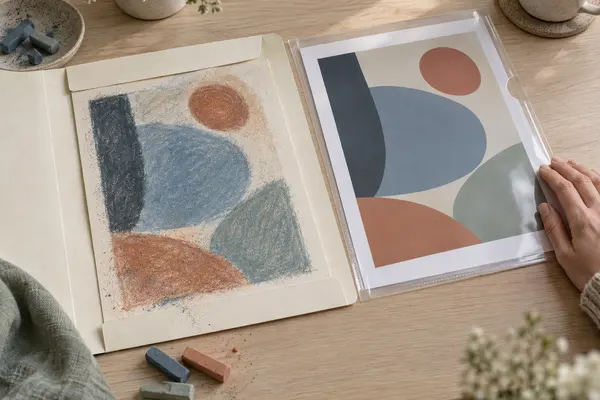
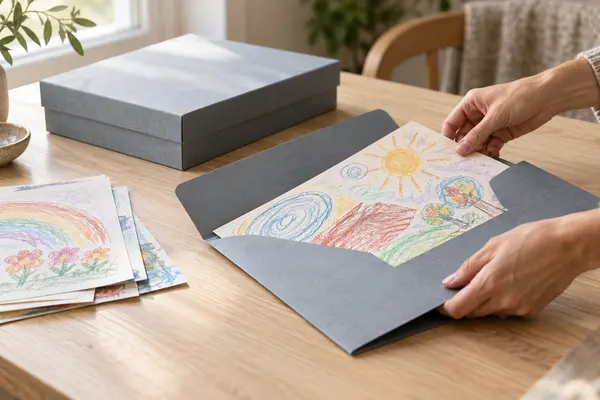
A plain folder holds drawings flat and unclipped. Archivists stop filling one at about 19 mm thick.
Sort a folder doodlefolder
Start
WHAT ARCHIVISTS DO
Drawings are more often spoiled by damp, the wrong plastic and an overstuffed folder than by age alone.
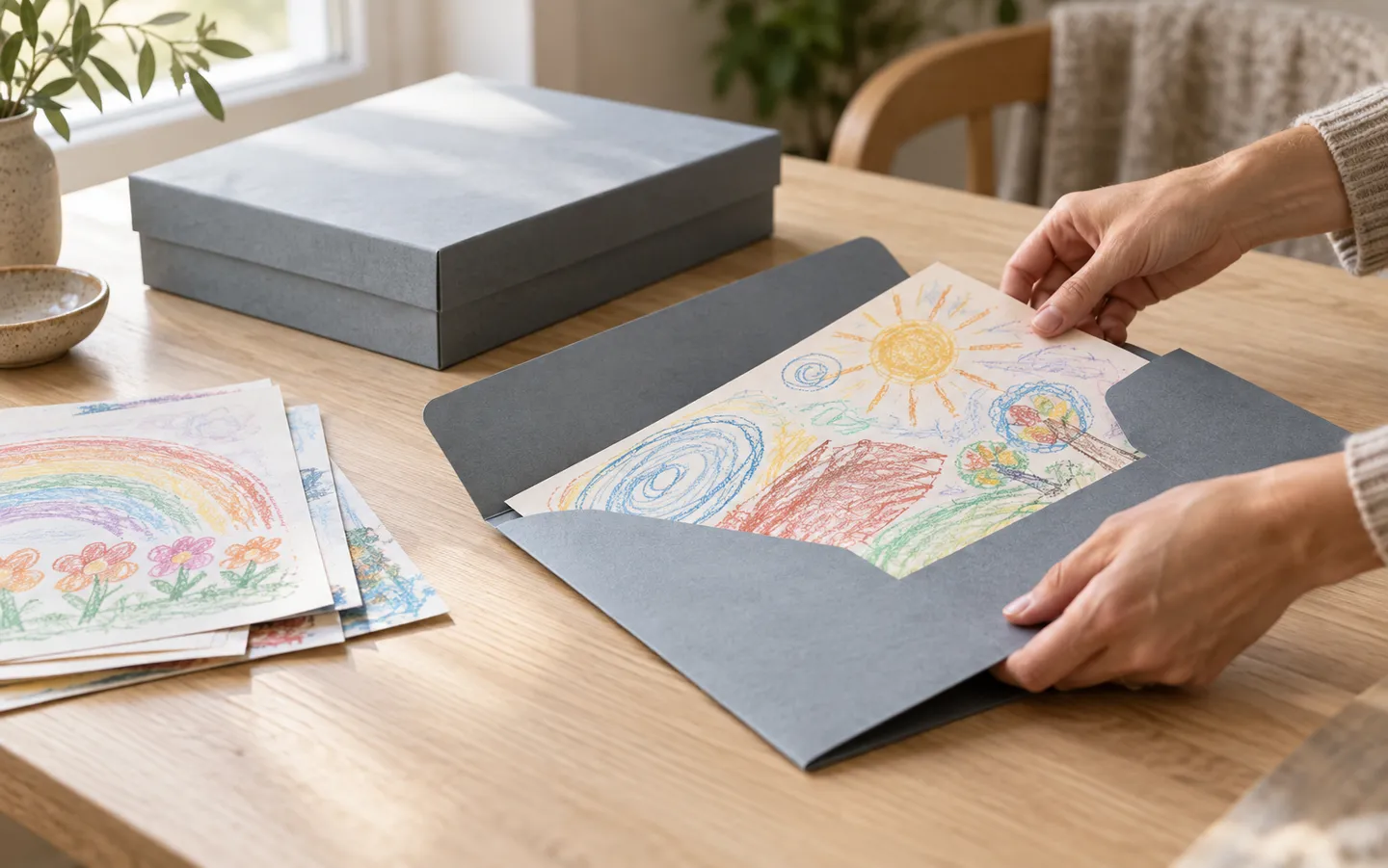
A fridge door full of crayon soon becomes a drawer of curled, clipped and sticky paper. Libraries and archives keep paper safe with a few simple rules: the right folder, the right plastic, the right room, and a copy somewhere else. Here they are, in plain English.
Plain English, with the sources linked.
FLATand dry
Check your sleevesKeep in mind
THE SHORT ANSWER
Three habits from library and archive care
do most of the work.
THE FOLDER
A plain folder holds drawings flat and unclipped. Archivists stop filling one at about 19 mm thick.
Sort a folderTHE PLASTIC
Polyester is stable but static can lift pastel and charcoal; PVC gives off acid as it ages.
Check your sleevesTHE BACK-UP
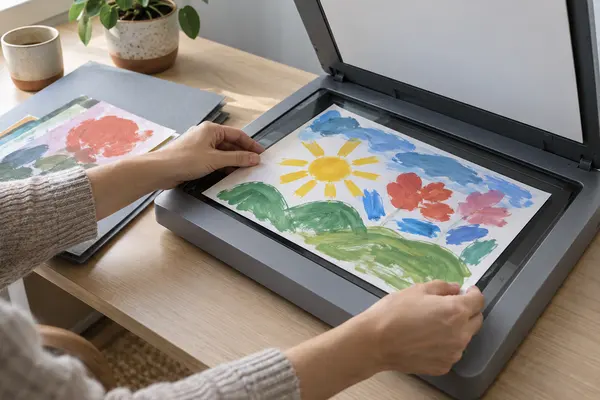
A 300 dpi scan, kept in two places, survives the leak or the clear-out that paper cannot.
See the numbersA QUICK SLEEVE CHECK
Pick what the drawing is made with, or what it is sitting in now. The verdicts come from the Library of Congress, the US National Archives and the Conservation Center for Art and Historic Artifacts.
Paper folders suit almost everything. Clear sleeves are handy for flat, firm media you want to see without handling.
TWO NUMBERS WORTH KNOWING
One number protects the paper.
The other protects the picture if the paper goes.
65% and under 24°C
Keep relative humidity below
Mould spores stay dormant without moisture. The National Archives gives 65% relative humidity and 24°C as limits that reduce the chance of growth, and aims for 45% to 55% at 18°C to 20°C.
THE DAMP LINE · US NATIONAL ARCHIVES
300 dpi × 2 copies
Scan, then keep at least
Its personal archiving guide suggests 300 dpi for everyday documents and photos, at least two copies stored as far apart as practical, and moving the files to current storage about every five to seven years.
THE BACK-UP · LIBRARY OF CONGRESS
Neither needs special kit. A cupboard in a heated room, and a second copy of the scans in another place, cover most homes.
SORT A FOLDER THIS WEEKEND
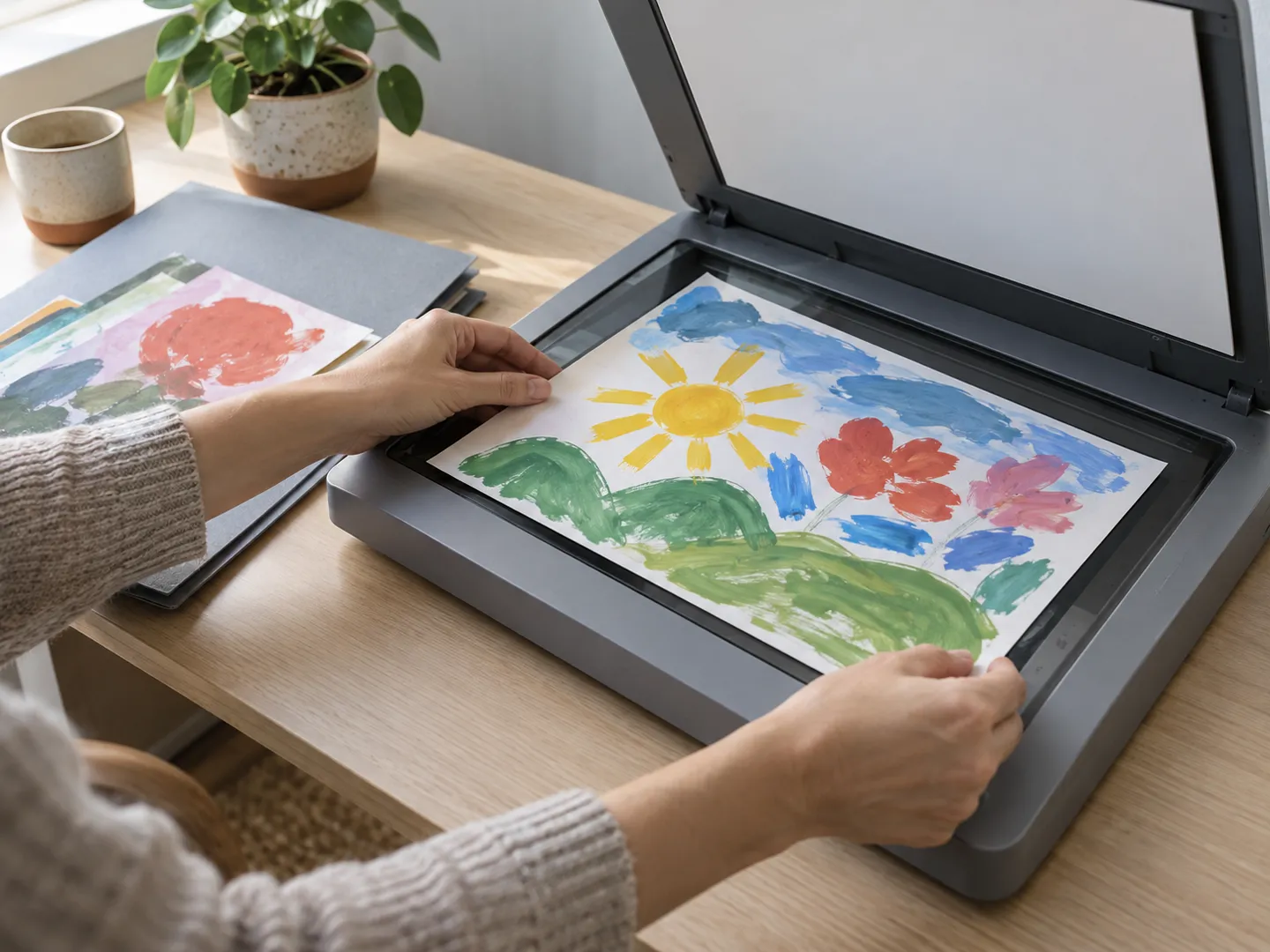
Step 1
Leave paper clips, rubber bands and sticky tape off the drawings. Archives keep fasteners off original art.
Step 2
Write the name and date lightly in pencil, not ink, with the drawing on a clean, hard surface.
Step 3
Start a new folder once a stack reaches about 19 mm. Keep folders flat in a box in a cupboard, not in the loft or cellar.
Step 4
Scan the ones you would grab first at 300 dpi, then keep two copies in different places.
STORAGE FACTS
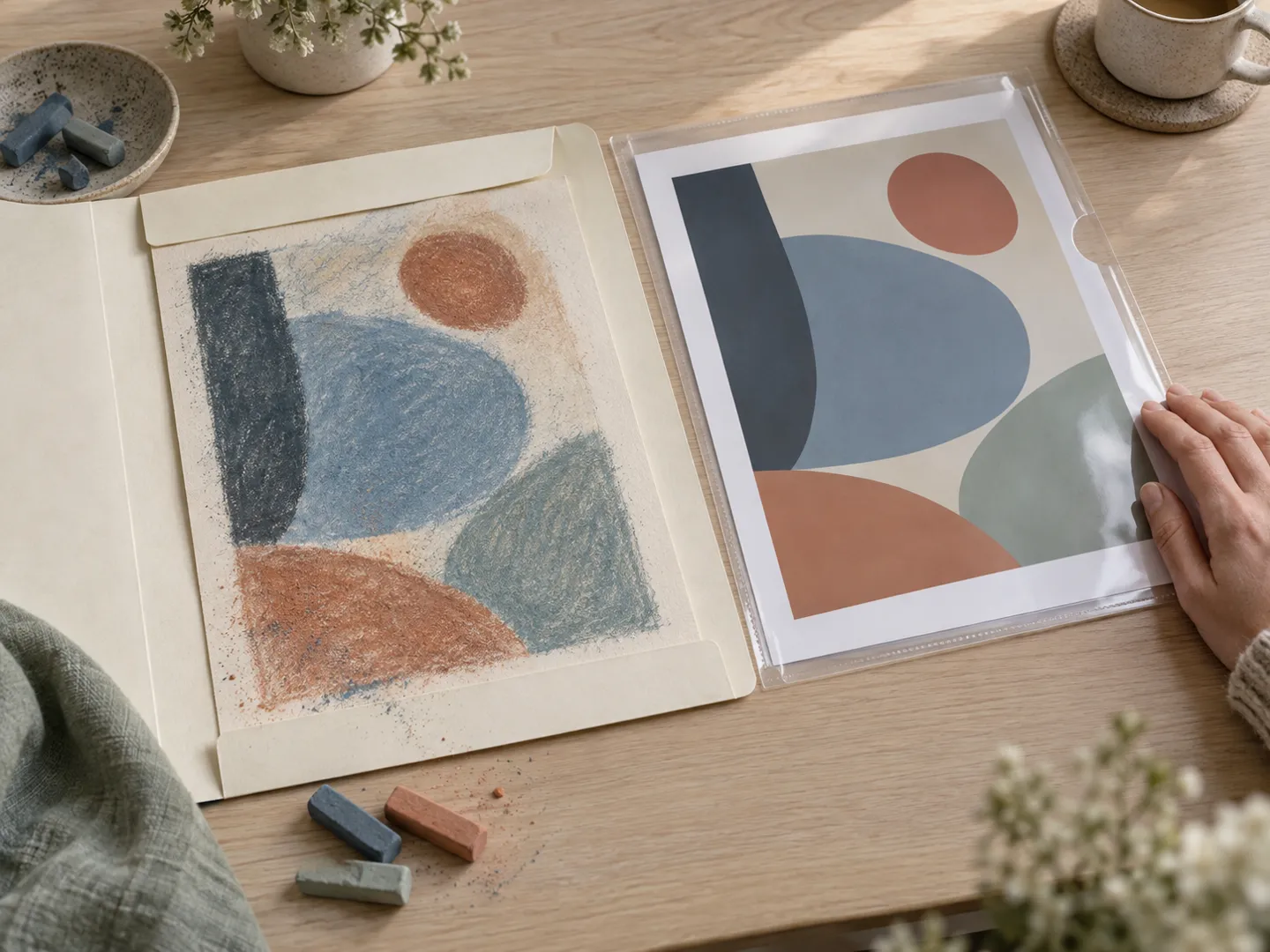
The Library of Congress warns that polyester film readily builds an electrostatic charge that can lift powdery media such as pastel, charcoal, pencil and flaking paint.
The Conservation Center for Art and Historic Artifacts advises avoiding PVC because it deteriorates and gives off hydrochloric acid. It calls polyethylene chemically inert and very stable.
The US National Archives keeps the stack in a folder no thicker than its broadest scored width, typically ¾ inch (about 19 mm), and says never to use fasteners on original artwork.
The Northeast Document Conservation Center gives 30% to 60% relative humidity for paper, at about 18°C to 22°C in a room people also use, and cooler for paper that is rarely looked at.
The Library of Congress recommends a cool, relatively dry (about 35% relative humidity), clean and stable place, and avoiding attics and basements with their leaks and extremes.
QUICK QUESTIONS
Short answers to the questions people ask most.
It depends on the drawing and the plastic. Polyester sleeves are clear and stable, but the Library of Congress warns they build up static that can lift pastel, charcoal and pencil. Keep powdery drawings in paper folders.
The Conservation Center for Art and Historic Artifacts advises avoiding PVC (polyvinyl chloride) because it deteriorates and gives off hydrochloric acid. It describes polyethylene as chemically inert and very stable.
Somewhere cool, fairly dry, clean and stable, such as a cupboard in a lived-in room. The Library of Congress advises avoiding attics and basements, where leaks and extremes are more likely.
The US National Archives says mould is less likely if relative humidity stays below 65% and temperature stays below 24°C, and targets 45% to 55% humidity at 18°C to 20°C.
The Library of Congress suggests 300 dpi for everyday documents and photos, and 400 or 600 dpi if you want to print them larger. Keep at least two copies of the scans in different places.
Destination
Updated
A NAME WORTH KEEPING
doodlefolder.com is part of the DoodleSale portfolio. It isn't in an auction right now, but you can ask about leasing it.